What evidence is missing?
Separate a proposal from a result. Make the data needed for an impact assessment visible.
RESEARCH / COMMUNICATIONS / PUBLIC AFFAIRS
The meaning of a development changes with the reader’s responsibilities. Raporbit’s vision is to bring sources, reader questions and human editorial judgement together in one briefing.
The Raporbit perspective ↓A researcher asks what evidence is missing. A communications team asks what needs explaining. A decision-maker needs to know what to watch next. A considered briefing understands those responsibilities.
National agenda
Local development
Source note
What changed?
Why does it matter?
What comes next?
Bring the right
question to the table.
Separate a proposal from a result. Make the data needed for an impact assessment visible.
Clarify the scope of the change. Keep uncertainty separate from a demonstrated benefit.
Bring the decision stage and stakeholder questions forward. Identify what to watch next.
The same evidence. Different responsibilities. A briefing that serves its reader.
Raporbit aims to prepare a source-led, reader-specific and editable basis for assessment. People make the decisions.
Regular reporting is a series of editorial decisions, made again each week. AI supports the process; a human editor has the final word.
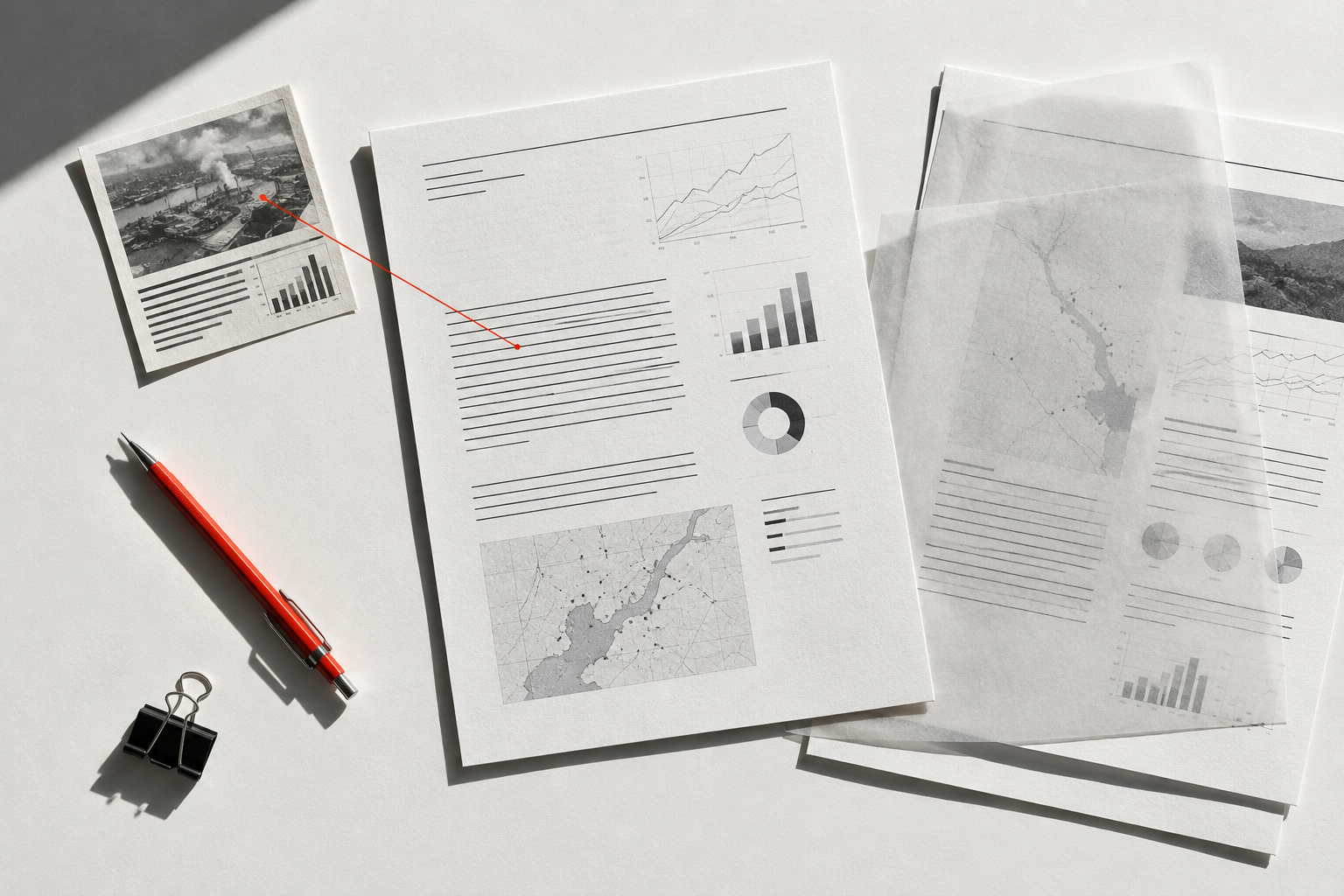
The source note, draft sentence and editor’s revision are layers of the same work. A considered report makes that relationship clear to its reader.
AI-generated illustrative editorial scene. Not a real report, dataset or customer deliverable.Bring national and local developments into the same pool. The reader’s needs determine what deserves attention, and why.
SOURCES → READER PRIORITIESRead the Claude-assisted draft alongside its supporting notes. An editor revises its meaning, claims and missing evidence.
CLAUDE ASSISTANCE → HUMAN REVISIONMake the final changes in Word. Prepare the final PDF after a human editor approves the content.
DOCX DRAFT → APPROVED PDFChange the reader in this synthetic example, then inspect the relationship between a source, a sentence and an editorial revision. This illustrates the product direction.
DRAFT AWAITING HUMAN REVIEW
Understanding who might be affected starts with understanding the limits of the evidence.
A local planning note proposes an interchange between central and outer districts.
A stakeholder note contains fictional views illustrating different access questions for travellers and businesses.
No impact has been measured, so improved access or efficiency cannot be established.
What evidence is missing before an impact assessment is possible?
Does your team prepare or approve a regular briefing? Let’s discuss your source coverage, readers and review routine.
Talk about your briefingSource gathering, reader framing, Claude-assisted editorial routines and DOCX/PDF generation have a documented foundation. A shared team workspace is the development direction. Self-service access is not available.